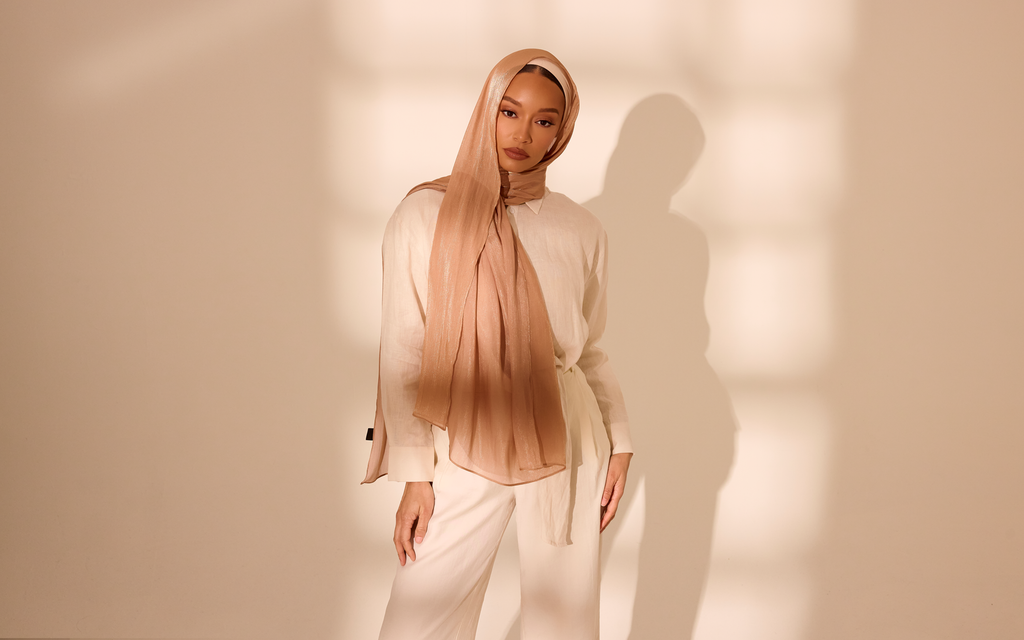


Hijab Styles for Round, Long, Square, and Heart-Shaped Faces
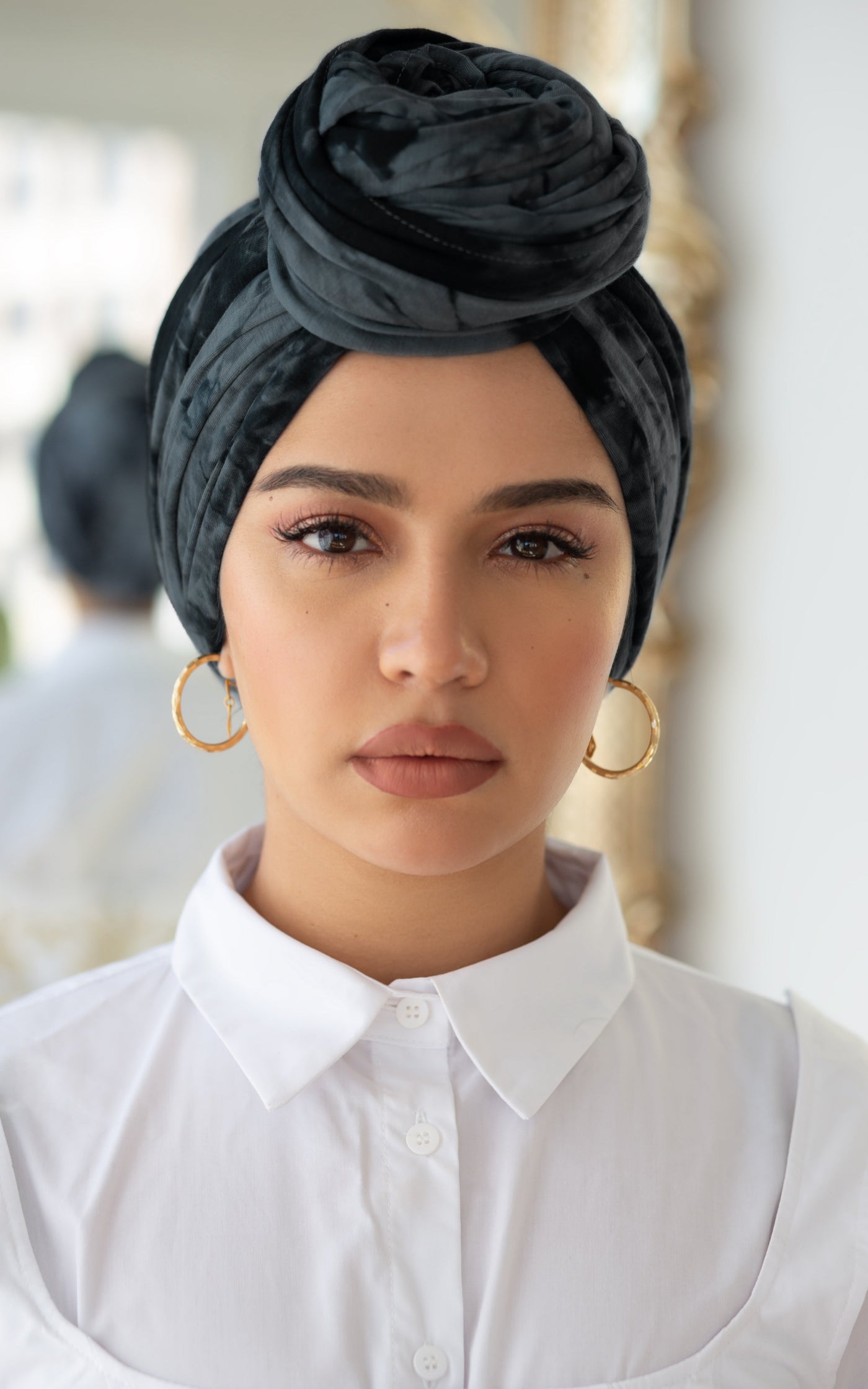
Here's the honest starting point: there is no wrong face shape, and no hijab style you're not allowed to wear. What follows are gentle ideas about balance, not rules. The same drape can look completely different depending on where you place volume, how high you tie your under-scarf, and whether your fabric falls soft or holds structure. Once you understand those few levers, you can flatter any face shape, and you can also happily ignore all of it on the days you just want to wrap and go.
Think of this as a friend talking you through the basics. We'll help you spot your face shape, then walk through round, long or oval, square, and heart-shaped faces one at a time, naming fabrics and placements that tend to feel balanced. For the actual wrapping technique, keep our how to wear a hijab guide open in another tab, and if you're still deciding between fabrics, our hijab fabric guide breaks down the feel of each one.
The short answer: Balance is the whole game. A round face looks longer with a loose side drape, a little height at the crown, and no tight pinning at the cheeks; a long face softens with gentle width and low volume; a square face suits rounded, softly draped frames; and a heart-shaped face evens out when the lower half of the frame is a touch fuller.
How to gently find your face shape
You don't need measurements or an app. Pull your hair back, look in the mirror, and notice three things: the widest part of your face, the shape of your jaw, and roughly how long your face looks compared to how wide. That's enough.
- Round: width and length are similar, with soft cheeks and a rounded jaw. Few hard angles.
- Long or oval: the face is noticeably longer than it is wide. Oval is the gently balanced version of this.
- Square: a strong, defined jawline with the forehead, cheeks, and jaw close to the same width.
- Heart: a wider forehead and cheekbones that narrow down to a smaller, more pointed chin.
If you land between two, that's normal and very common. Read both sections and borrow whatever feels right. Your face shape is a starting point, not a verdict.
Round faces: add a little length, soften the width
The friendly goal here is gentle vertical balance, drawing the eye up and down rather than side to side. A round face suits a little lift at the crown and a drape that falls long down the front.
Start with height at the back of the head. A volumizing scrunchie placed at the crown lifts the fabric slightly and adds the vertical line that balances soft, round cheeks. Keep your under-scarf sitting a touch higher on the forehead rather than low and rounded, so the framing of your face feels a little longer.
For draping, let one side fall longer and avoid bunching fabric tightly at the cheeks. A soft, fluid fabric like our modal drapes close and long without adding bulk at the sides. Chiffon works beautifully too, layering light and falling in a vertical line. If you love jersey for everyday wear, choose a relaxed front drape rather than wrapping it snugly around the face.
Long and oval faces: add soft width, keep volume low
If your face reads long, the kind move is to add a little width and avoid extra height at the crown. The good news for oval faces: you're the most flexible shape here, so treat every idea below as optional.
Skip the crown volume. Instead of lifting fabric at the top, let your hijab sit closer to the head and frame the face with soft fullness at the sides, around the cheeks and jaw. This visually shortens a long face in the gentlest way. Set your under-scarf a little lower on the forehead so you're not adding length up top.
Fabric with a bit of body helps here. Our premium jersey holds a soft, rounded shape around the face and stays put without pins, which makes that side fullness easy to keep all day. A wider wrap, with fabric brought gently across the cheeks rather than pulled tight, adds the balancing width. If you reach for chiffon, a slightly fuller, looser drape at the sides will feel more balanced than a sleek, narrow one.
Square faces: soften the corners, round the frame
A defined jaw is genuinely lovely, and nothing here is about hiding it. The idea is simply to add some softness and curve around a strong, angular frame so the look feels balanced.
Curved lines are your friend. Drape the fabric so it rounds gently along the jaw rather than falling in a straight, sharp line. Loose, flowing fabric does this naturally. Modal and chiffon both fall in soft curves that ease angular lines, where a very stiff fabric would echo them.
A little height at the crown helps balance a strong jaw, so a volumizing scrunchie placed centrally is worth trying. Keep your under-scarf framing slightly rounded at the forehead rather than straight across. When you drape, bring the fabric a touch forward over the sides of the jaw to soften those corners, letting it fall in a gentle arc.
Heart-shaped faces: balance a wider top with a fuller lower frame
Heart-shaped faces are wider at the forehead and narrower at the chin, so the gentle aim is to add a little fullness lower down and avoid extra width up top.
Keep the volume low and forward. Rather than adding height or width at the crown, let your drape fall with a little fullness around the jaw and chin to balance a narrower lower face. A longer front drape on both sides frames the chin softly. Set your under-scarf so it doesn't widen the forehead, sitting neatly rather than pushed out at the temples.
Soft, draping fabrics that pool gently near the jaw work well. Modal and premium jersey both fall close and add that lower softness without bulk at the top. A little crown height can work if your chin is very pointed and you want more overall balance, so feel free to experiment with a small scrunchie and see what you think.
A few things that flatter every face shape
Whatever your shape, a few habits make any style look more polished. A well-fitted under-scarf gives you a smooth base and a clean hairline to drape over. Choosing the right fabric weight for the look you want matters more than the wrap itself, so lean on the fabric guide when you're unsure. And if your hijab tends to shift through the day, our notes on how to stop your hijab slipping will keep your shaping in place from morning to evening.
Most of all, treat all of this as gentle encouragement to play. The most flattering style is genuinely the one you feel comfortable and like yourself in.
Frequently asked questions
How do I know my face shape for hijab styling?
Pull your hair back and look at three things in the mirror: the widest part of your face, your jaw shape, and whether your face looks longer than it is wide. Round faces are soft and similar in width and length, long or oval faces are clearly longer, square faces have a defined jaw, and heart faces are wider at the forehead and narrower at the chin. If you fall between two, that's completely normal.
What is the best hijab style for a round face?
For a round face, add a little height at the crown with a volumizing scrunchie and let the fabric drape long down the front to create vertical balance. Keep your under-scarf slightly higher on the forehead, and choose a soft, fluid fabric like modal or chiffon that falls close rather than bunching at the cheeks.
Does my face shape really limit which hijab styles I can wear?
Not at all. There is no wrong face shape and no style you're not allowed to wear. These are gentle ideas about balance, not rules. Any face shape can wear any drape or fabric, so use these tips as inspiration and feel free to ignore them whenever you simply want to wrap and go.
Which hijab fabric is most flattering for my face shape?
It depends on the effect you want. Soft, fluid fabrics like modal and chiffon add gentle curves that flatter round and square faces, while jersey holds a soft, rounded shape that helps add width to long faces. For a full breakdown of how each fabric feels and drapes, our hijab fabric guide is the best place to start.
