

How to Wash and Care for Your Hijab (by Fabric)
The short answer: Wash your hijabs by hand or on a delicate cycle in cool water with a mild detergent, never wring or twist them, and air-dry them flat away from direct sun. Most damage to a hijab doesn't come from wearing it. It comes from hot washes, harsh spinning, and the dryer. Get those three things right and almost any fabric will stay soft and hold its color for years. Below are the golden rules first, then exact steps for each fabric we carry, plus quick fixes for wrinkles and storage.
The golden rules for every hijab
These apply whether you're caring for jersey, chiffon, satin or anything in between. When in doubt, default to gentler.
- Wash cool. Use cold or lukewarm water (around 30 degrees C / 86 degrees F or below). Hot water fades dye and can shrink or warp delicate weaves.
- Skip the heat everywhere. No hot wash, no hot dryer. Heat is the single biggest cause of shrinkage, pilling and dullness.
- Use a mild, gentle detergent. A small amount of a delicates or wool-safe wash is plenty. Avoid bleach and skip fabric softener on satin and chiffon, as it can leave a film.
- Never wring or twist. Wringing stretches fibers and sets creases. Press water out gently between your palms or against a clean towel instead.
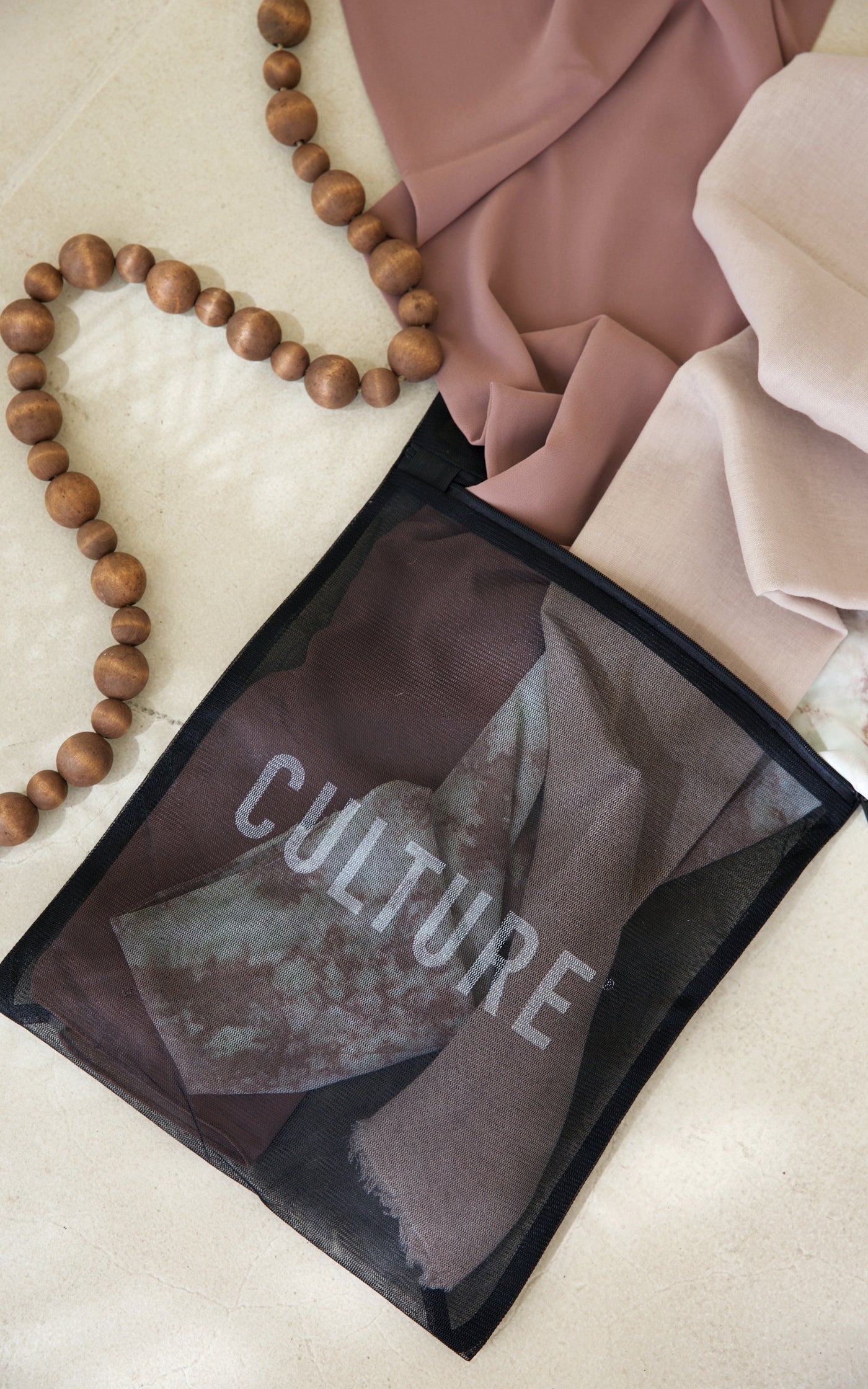
- Use a mesh delicates bag for anything machine-washed. It stops snags, stretching and tangling with zips and hooks.
- Wash darks separately the first few times, and turn pieces inside out to protect the surface that shows.
- Dry flat or hang in shade. Direct sun fades color. Air-drying away from radiators keeps the shape and finish.
If you'd like a refresher on which fabric is which before you start, our hijab fabric guide breaks down how each one behaves.
Jersey
Jersey is a knit, so it's forgiving and the easiest to care for, but it can stretch out of shape if you're rough with it.
- Washing: Machine wash cold on a gentle cycle inside a mesh bag, or handwash. Both are fine.
- Drying: Dry flat if you can. Hanging a wet jersey can pull it longer over time. Lay it on a towel and reshape it gently.
- Wrinkles: Jersey rarely wrinkles. If it does, a quick steam or a warm (not hot) iron sorts it out.
- Avoid: The dryer, which causes most jersey pilling and shrinkage. Browse the range in premium jersey if you want a low-maintenance everyday option.
Modal
Modal is a soft, breathable fiber with a light drape. It's easy to wash but slightly more prone to creasing than jersey.
- Washing: Machine wash cold on gentle in a mesh bag, or handwash. Use a mild detergent and a slow spin.
- Drying: Hang in shade or dry flat. It dries quickly, so it's ready to wear sooner than most fabrics.
- Wrinkles: Steam is the gentlest fix. If you iron, use a low-to-medium setting.
- Avoid: High spin speeds, which press creases in. See the modal collection for everyday-soft styles.
Chiffon
Chiffon is light, sheer and the most delicate fabric here, so it rewards a gentle hand. Handwashing is the safest route.
- Fill a basin with cool water and a small amount of mild detergent.
- Swirl the hijab through the water for a minute or two. Don't scrub or rub.
- Rinse in clean cool water until it runs clear.
- Lift it out and press the water out gently against a towel. Never wring it.
- Lay it flat or hang it over a padded hanger to drip-dry in the shade.
If you machine wash, always use a mesh bag on the most delicate cycle. For wrinkles, hold a steamer a few inches away, or iron on the lowest setting with a thin cloth between the iron and the fabric. Never put a hot iron directly on chiffon. Explore the chiffon styles when you want a lighter, more formal drape.
Satin
Satin has that smooth, light-catching surface, which is exactly what needs protecting. The finish can mark or snag, so treat it gently.
- Washing: Handwashing in cool water is best. If you machine wash, use a mesh bag on a delicate, cold cycle and skip fabric softener.
- Drying: Hang to dry in the shade. Avoid clips or pegs that bite into the fabric, as they can leave permanent marks.
- Wrinkles: Steaming is far safer than ironing. If you must iron, use the lowest setting, turn it inside out, and place a cloth between the iron and the satin.
- Avoid: Snags from rings and rough nails, and direct high heat, which can dull the sheen. Browse satin for occasion-ready pieces.
Woven viscose
Woven viscose has a soft, slightly textured feel and a lovely drape, but viscose is weaker when wet, so support it well.
- Washing: Handwash in cool water where possible, supporting the full weight of the fabric so it doesn't stretch. If machine washing, use a mesh bag on a cold delicate cycle.
- Drying: Dry flat on a towel to keep its shape. Hanging a wet woven viscose can stretch it.
- Wrinkles: It creases more than knits, so steam it or iron on medium while slightly damp for the smoothest result.
- Avoid: Hard wringing and high spin speeds. See the viscose collection for textured, draping styles.
How to get wrinkles out of a hijab
Steaming is the friendliest method for almost every fabric. It relaxes creases without pressing hard heat onto delicate fibers.
- Steam first. A handheld steamer, or hanging the hijab in a steamy bathroom while you shower, works on chiffon, satin, modal and viscose alike.
- Iron only when needed, and always start low. Use a pressing cloth on satin and chiffon, and turn pieces inside out.
- Iron slightly damp. Woven viscose and modal press smoother when there's a little moisture left in them.
- No steamer? Hang it overnight. Many light creases simply drop out as the fabric relaxes.
How to store and fold hijabs
Good storage saves you ironing later. The goal is to avoid hard creases and keep delicate fabrics from snagging.
- Roll, don't crease. Loosely rolling chiffon, satin and viscose avoids sharp fold lines. Jersey and modal are happy folded or rolled.
- Hang delicates on padded or velvet hangers so they keep their drape and don't slip off.
- Keep them dry and shaded. Store fully dry, out of direct sunlight, to protect color and prevent any musty smell.
- Separate the snag-prone ones. Keep satin and chiffon away from anything with hooks, zips or velcro.
Once your hijabs are fresh and pressed, our guide on how to wear a hijab walks through easy, everyday styles.
Frequently asked questions
Can I machine wash my hijabs?
Most can, as long as you use a cold, gentle cycle and a mesh delicates bag. Jersey and modal handle the machine well. Chiffon, satin and woven viscose are safest handwashed, but a mesh bag on the most delicate setting works if you're careful.
How do I get wrinkles out without an iron?
Steam them. Use a handheld steamer, or hang the hijab in the bathroom while you shower and let the steam relax the creases. Hanging a hijab overnight also lets many light wrinkles drop out on their own.
What water temperature should I use?
Cool or lukewarm, around 30 degrees C (86 degrees F) or below. Cold water protects the color and prevents shrinking, while heat is the main cause of fading, pilling and warped delicate fabrics.
How should I dry my hijab?
Air-dry every time. Lay jersey and woven viscose flat to keep their shape, and hang chiffon, satin and modal in the shade. Skip the tumble dryer, as the heat shrinks fibers and dulls finishes.
